

Spa & Massage Prices in Hyderabad (2026): What 60, 90 and 120 Minutes Really Cost
October 10, 2026
Body Massage in Hyderabad: 8 Massage Types Explained and How to Choose One
October 16, 2026
Swedish or Deep Tissue? How to Tell Which Pressure Your Body Actually Needs
Most people walk into a spa with one worry. Will this massage be too soft to help, or too hard to enjoy?
The Swedish vs deep tissue massage choice comes down to that worry. One calms your whole body. The other works into stubborn, tight muscles. Picking the right one depends on what your body is telling you today, not on which sounds stronger.
Key Takeaways
- One Swedish session can shift stress hormones. In a study of 53 healthy adults, a single 45-minute Swedish massage lowered cortisol and arginine vasopressin, two hormones linked to stress.
- Deep tissue can ease chronic back pain. In a trial of 59 people with chronic low back pain, ten 30-minute deep tissue sessions cut pain about as much as deep tissue plus anti-inflammatory pills.
- Stress and health drive most bookings. 79% of massage clients said their last massage was for health and wellness (49%) or stress (30%).
- Relief is often short term. Research reviews show massage brings short-term pain relief, so regular sessions tend to work better than one visit.
- More pressure is not always better. Swedish suits stress and first visits. Deep tissue suits long-term knots and stiffness.
The Difference Between Swedish and Deep Tissue
Both styles use oil and many of the same hand movements. What really sets them apart is speed, depth and goal.
Swedish Massage Strokes Explained
Swedish massage uses five classic strokes. Your therapist blends them into one smooth, flowing session.
- Effleurage: long, gliding strokes that warm the muscles
- Petrissage: kneading and rolling, like gently working dough
- Friction: small circles on tight spots
- Tapotement: light, rhythmic tapping
- Vibration: gentle shaking to loosen muscles
The pace is steady and soothing. The aim is to relax your nervous system and ease surface tension.
How Deep Tissue Massage Works
Deep tissue uses slower strokes and firmer, focused pressure. The therapist works layer by layer, often with thumbs, knuckles or forearms.
Instead of covering the whole body evenly, they spend time on problem areas. Think of a stiff neck, a tight lower back or knotted shoulders.
Swedish vs Deep Tissue Massage at a Glance
Feature | Swedish Massage | Deep Tissue Massage |
Main goal | Relaxation and stress relief | Release of chronic tension and knots |
Pressure | Light to medium | Firm to deep |
Speed | Flowing and steady | Slow and focused |
Feels like | Calming, sleepy | Intense but “good hurt” |
Best for | Beginners, stress, poor sleep | Stiffness, desk posture, old tightness |
After the session | Relaxed, light | Possible mild soreness for 1 to 2 days |
Massage Pressure Levels Explained
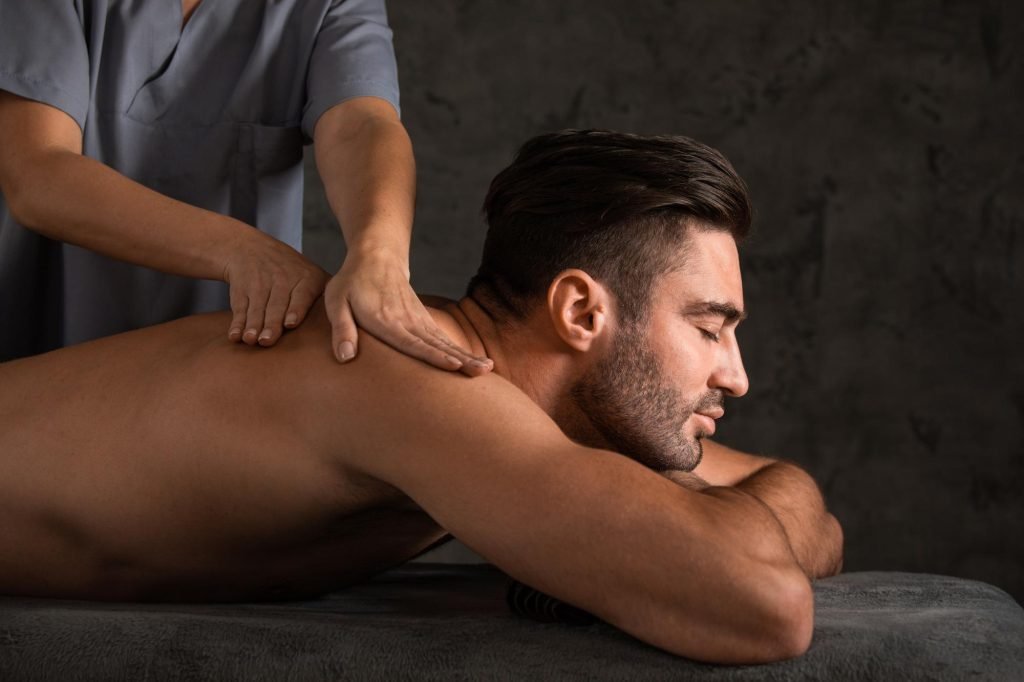
Many spas use a simple 1 to 10 scale. It helps you describe what you feel instead of guessing.
- 1 to 3 (light): gentle and soothing, ideal for stress and sensitive bodies
- 4 to 6 (medium): firm enough to feel, still easy to relax into
- 7 to 8 (firm): strong pressure, you notice it, but you can breathe easily
- 9 to 10 (too much): you hold your breath or tense up, so ask your therapist to ease off
“If you are holding your breath or clenching your jaw, the pressure is too deep. Your muscles fight back instead of letting go.”
Light vs deep pressure massage is not a contest. A tense muscle often releases better under steady medium pressure than under force.
How to Tell Which Pressure Your Body Actually Needs
Your body gives clear signs. Use them to decide which is better, Swedish or deep tissue, for you right now.
Choose Swedish If You Feel
- Stressed, anxious or mentally tired
- Tight all over, but with no single sore spot
- Unable to sleep well
- Nervous about your first massage
Is Swedish massage good for beginners? Yes. It is the easiest way to learn how your body responds to touch.
Choose Deep Tissue If You Feel
- A knot that keeps coming back in the same place
- Stiffness from long desk hours or driving
- An ache that has lasted weeks, not days
- Tightness that a Swedish massage did not shift
Does deep tissue massage help chronic tension? For many people, yes. Deep tissue for knots and stiffness works best when sessions are regular and paired with stretching.
Which Massage for Stress Relief?
For stress alone, Swedish is usually the better pick. Slow, rhythmic strokes help your body shift out of “fight or flight” mode. Deep pressure can sometimes keep a stressed body on guard.
What the Research Says
Science supports both styles, each for a different goal.
- Swedish and stress: In a Cedars-Sinai study, one 45-minute Swedish massage lowered stress hormones in healthy adults. The light touch group saw smaller changes.
- Deep tissue and back pain: A randomized trial found deep tissue massage alone reduced chronic low back pain about as well as massage plus pain pills.
Both results are encouraging. Still, massage supports care. It does not replace a doctor’s check for ongoing or severe pain.
Can You Combine Swedish and Deep Tissue?
Yes, and many guests prefer it. A combined session starts with Swedish strokes to warm and relax the body. The therapist then uses deeper pressure only where you need it.
- Good for: people with one or two problem areas who still want to relax
- Example: a full-body Swedish massage with deep work on the neck and shoulders
- Tip: mention your problem areas before the session starts
What to Ask Your Therapist About Pressure
A short chat before your massage makes a big difference. Do not be shy to speak up during the session too.
- “Can we start medium and adjust from there?”
- “Please spend more time on my shoulders and lower back.”
- “Is any soreness I feel tomorrow normal?”
- “Should I avoid deep pressure with my health condition?”
Bali Spa tip: Feedback is never rude. A good therapist wants to know if the pressure is too light, too deep, or just right.
When to Avoid Deep Pressure
Deep tissue is safe for most healthy adults. Choose a gentle Swedish massage or speak to your doctor first if you:
- Are pregnant
- Have a blood clot, varicose veins or take blood thinners
- Have osteoporosis, a recent fracture or recent surgery
- Have a fresh injury with swelling or bruising
- Have fever, a skin infection or an open wound
Always share your health history before the session. It helps your therapist choose safe pressure.
Swedish Massage in Hyderabad at The Bali Spa
At The Bali Spa, every session starts with a quick talk about your body, stress and pressure preference. Our therapists then guide you towards Swedish, deep tissue or a mix of both.
Explore our full range of massage services, read our guide on choosing the right massage, or book your session at Miyapur, Manikonda, Nallagandla or GSM Mall.
Final Thoughts: Let Your Body Choose the Pressure
The right massage is not the softest or the strongest one. It is the one that matches how your body feels today. Choose Swedish to calm a busy mind, deep tissue to release old tightness, or ask for a mix of both.
Ready to feel the difference? Call or WhatsApp The Bali Spa today to book your Swedish massage in Hyderabad, at Miyapur, Manikonda, Nallagandla or GSM Mall. Tell us how you feel, and our therapists will match the pressure to your body.
Frequently Asked Questions
Swedish uses lighter, flowing strokes to relax the whole body. Deep tissue uses slower, firmer pressure to target tight, deeper muscles. Both use oil and many of the same basic movements
For long-term back stiffness and knots, deep tissue often helps more. For mild back tension caused by stress, Swedish may be enough. Sudden or severe back pain should be checked by a doctor first.
You may feel some discomfort on tight spots, but it should never be sharp or unbearable. Mild soreness for a day or two is normal. Tell your therapist right away if the pressure is too much.
Firm pressure works deeper muscle layers, which can leave them tender, much like after a workout. Drinking water, taking a warm shower and light stretching can help. Soreness that lasts more than three days is worth checking with your doctor.
Many people sleep better after a Swedish massage. Its slow, steady rhythm helps your body relax and lowers stress hormones. An evening session works best if sleep is your main goal.
For chronic tension, once a week for three to four weeks often works well. After that, every two to four weeks can help keep stiffness away. Your therapist can adjust this based on how your body responds.
Yes. Many therapists add firmer pressure to tight spots during a Swedish session. Just tell them which areas need more work before you begin.
Swedish is the safer choice for a first massage. It helps you learn how your body handles pressure. You can try deep tissue on your next visit.